
Choosing the Right Shipping Method: A Key Component of Successful Trade with China
Trade with China is not limited to selecting products, negotiating with sellers, and paying the purchase price. After purchasing or sourcing goods, selecting the appropriate shipping method, coordinating logistics, and tracking the shipment until it reaches its destination are among the most important stages. When purchasing from China, many Iranian individuals, traders, retailers, companies, and manufacturers focus primarily on the price of the goods. However, shipping cost, delivery time, transportation risks, and service quality can also directly affect the profitability and overall success of a transaction.
Goods can be transported from China to Iran through different routes depending on the type of product, order volume, urgency, budget, final destination, customs conditions, and packaging method. Sea, air, road, rail, and multimodal transportation each have their own advantages and limitations. Selecting an unsuitable method may increase costs, delay delivery, damage the goods, create documentation problems, or reduce the economic viability of the transaction.
Throughout this process, Iran Hangzhou Trade Tower can serve as a support partner and coordinating arm for Iranian individuals and legal entities by assisting with route selection, communication with Chinese counterparts, follow-up on product preparation, initial shipping coordination, and the transfer of necessary information.
Why Is Transportation Important in Trade with China?
At first glance, shipping may appear to be a stage that begins after the purchase has been completed. In practice, however, shipping considerations should be addressed from the very beginning of the transaction. The type, weight, volume, value, sensitivity, required delivery time, packaging conditions, and final destination of the goods should all be assessed before the purchase is finalized.
For example, a product with a low purchase price may generate substantial shipping costs because of its high volume or weight. A product that must reach the Iranian market quickly may not be suitable for sea freight. Fragile, sensitive, perishable, high-value, or specially regulated goods also require more careful packaging, coordination, and tracking.
For individuals, selecting an unsuitable shipping method can result in their initial capital being tied up by delays, unexpected expenses, or delivery problems. For legal entities and companies, shipping disruptions may lead to interrupted sales, production delays, customer dissatisfaction, increased warehousing costs, or damage to commercial credibility.
Transportation should therefore be regarded as an important component of any commercial plan involving China, rather than as a secondary or insignificant stage.
Understanding Different Shipping Methods from China to Iran
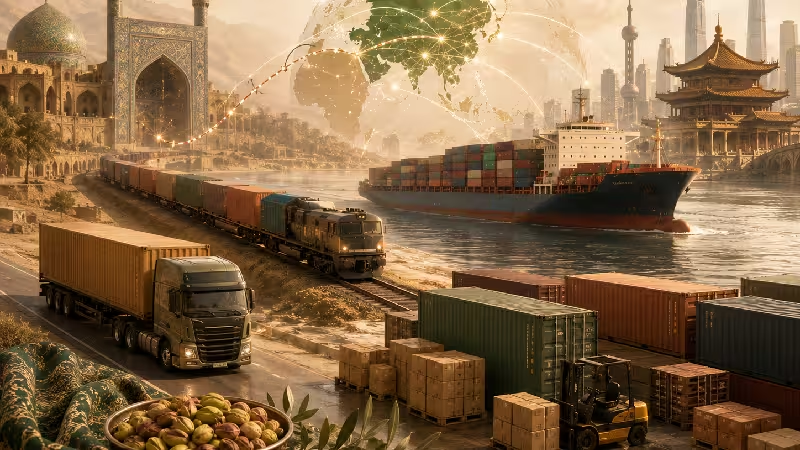
Goods are generally transported from China to Iran through several principal methods. Depending on the type of product and the conditions of the transaction, each method may or may not be suitable.
Sea freight is generally appropriate for large, heavy, and non-urgent shipments. For many products, it is more cost-effective, although it requires a longer delivery period. Sea freight is a common option for high-volume goods shipped as full-container loads or less-than-container loads.
Air freight is more suitable for lightweight, high-value, urgent goods, and product samples. It offers greater speed, but its cost is generally higher. For individuals or companies requiring the rapid delivery of samples or small quantities of goods, air freight may be an appropriate option.
Road and rail freight also play an important role in trade between China and Iran, particularly given regional connections and overland routes associated with the Silk Road. For certain products, these methods can offer an intermediate option between air and sea freight in terms of both time and cost.
Iran Hangzhou Trade Tower can help Iranian businesses assess and select a more suitable route based on the type of product, order volume, and commercial priorities.
Sea Freight: Suitable for High-Volume and Cost-Effective Shipments
Sea freight is one of the most common methods used to import goods from China to Iran. It is generally appropriate for goods with substantial volume or weight, where delivery is not highly urgent and the buyer seeks to reduce transportation costs. Machinery, components, equipment, raw materials, consumer goods, packaged products, and bulk orders can often be transported by sea.
However, sea freight requires careful attention to scheduling, appropriate packaging, container type, shipping documents, coordination with the seller, delivery of the goods to the port, and shipment tracking. If the goods are prepared late or the documents are not completed correctly, the entire shipping schedule may be delayed.
For legal entities and companies with regular or high-volume imports, sea freight can be economically suitable, but it requires careful planning. Iran Hangzhou Trade Tower can provide support by coordinating with the seller, following up on product preparation, and transferring the necessary shipping information.
Air Freight: A Fast Solution for Urgent and Lightweight Goods
Air freight is suitable when delivery speed is a major priority. Product samples, essential components, lightweight and high-value goods, exhibition materials, documents, urgently required equipment, and orders that must reach Iran within a short period can be transported by air.
The principal advantage of air freight is speed, but its cost is generally higher than many other shipping methods. Its use should therefore be evaluated according to the value of the goods, delivery urgency, and economic viability. Rapid receipt of a sample may help an individual or company make a commercial decision, but air freight may not be cost-effective for a bulk order.
Iran Hangzhou Trade Tower can assist Iranian businesses by coordinating the dispatch of samples, communicating with Chinese counterparts, following up on shipment preparation, and transferring information related to air transportation.
Road and Rail Freight: Important Capacity Along the Iran–China Route
In recent years, road and rail routes connecting China, Central Asia, Iran, and the broader Eurasian region have gained greater importance. For certain products, these routes can provide an appropriate balance between time and cost. Rail and road freight may be worth considering for goods that require faster delivery than sea freight but for which air freight would be too expensive.
Selecting these routes requires consideration of the transit route, regulations in intermediate countries, required documentation, scheduling, type of goods, and coordination among multiple carriers. Multimodal transportation may also be used in some cases, with different sections of the journey completed by road, rail, and sea.
Iran Hangzhou Trade Tower can support Iranian individuals and legal entities by reviewing available options, communicating with Chinese counterparts, collecting preliminary information, and assisting with the necessary coordination.
The Importance of Packaging in International Transportation
Appropriate packaging is one of the most important considerations when shipping goods from China to Iran. Products prepared at a factory must be protected against long-distance transportation, repeated handling, weather changes, loading, unloading, and warehousing. Inadequate packaging can result in breakage, moisture damage, crushing, scratches, damaged cartons, or reduced product quality.
For consumer products, packaging serves not only a protective function but also a sales and branding purpose. For industrial goods, packaging must protect components, equipment, and machinery against impact and damage. Export products and sensitive goods may also be subject to more demanding packaging standards.
Iran Hangzhou Trade Tower can support Iranian buyers by communicating packaging requirements to sellers, conveying the buyer’s concerns, requesting photographs, and conducting an initial review of packaging conditions before shipment.
Shipping Documents and the Importance of Coordinated Information
International transportation requires accurate documents and information. Product specifications, weight, volume, number of packages, seller and buyer names, delivery terms, shipping information, packaging type, and relevant documentation should be as precise and consistent as possible. Any discrepancy may cause delays, additional costs, or difficulties at subsequent stages.
For individuals, the complexity of shipping documents can be confusing. For companies, accurate document coordination is also critically important, particularly when goods are being imported for production, sales, or a specific project.
Iran Hangzhou Trade Tower can play an effective role by communicating with Chinese counterparts, following up on the required information, supporting the preliminary coordination of documents, and transferring essential details to the Iranian buyer.
Following Up on Product Preparation Before Shipment
Delays in preparing goods are a common problem when purchasing from China. A seller may initially provide a delivery date, but the goods may be completed later because of production delays, shortages of raw materials, order modifications, incomplete packaging, or congestion within the transportation system. If these issues are not followed up promptly, the shipping schedule and delivery time in Iran may also be affected.
Following up on product preparation includes reviewing production status, packaging schedules, carton readiness, coordination of delivery to the freight company, obtaining photographs, and confirming that the shipment is ready for dispatch.
Through continuous communication with Chinese counterparts, Iran Hangzhou Trade Tower can follow up on order status and transfer the necessary information to the Iranian buyer. This is particularly important for companies operating according to fixed schedules.
Tracking Shipments in Transit
Once the goods have been dispatched, shipment tracking begins. Buyers need to know when their goods left the point of origin, which stage of transportation they have reached, when they are expected to arrive, and whether any problems have occurred during transit. Insufficient information about shipment status can cause concern, disrupt sales planning, or delay preparations for subsequent stages.
For individuals, shipment tracking provides greater confidence and enables better time management. For legal entities and companies, it can also be important for production planning, sales, warehousing, and customs-clearance arrangements.
Iran Hangzhou Trade Tower can provide support by communicating with sellers and shipping parties in China, transferring shipment-status information, and following up on essential matters.
Coordination Among the Seller, Buyer, and Freight Company
Successful transportation requires coordination among several parties: the Chinese seller, Iranian buyer, freight company, warehouse, port, airport, or road-transport network and, in some cases, several other operational intermediaries. If communication among these parties is not accurate and systematic, the likelihood of delays, delivery errors, inconsistent information, or additional expenses increases.
The seller may have prepared the goods while the freight company has not yet been coordinated. The freight company may be ready while the packaging or documents remain incomplete. The buyer may also receive essential information too late. Such coordination problems are common in international trade and can generate significant costs.
Iran Hangzhou Trade Tower can serve as a communications link between the Iranian party and Chinese counterparts, helping to organize these communications and follow up on operational stages.
Shipping Services for Individuals
Individuals generally face simple but important questions when shipping goods from China. Which method is most suitable for their order? How is the shipping cost estimated? When will the goods arrive? Can samples be sent? How should shipping arrangements be coordinated with the seller? What information is required?
For this group, Iran Hangzhou Trade Tower can provide initial guidance, coordinate with sellers, follow up on product preparation, assess shipping options, and transfer essential information. These services can make the shipping process more transparent and manageable for less-experienced clients.
Shipping Services for Legal Entities and Companies
Companies and legal entities generally deal with larger, more sensitive, or recurring orders. For these clients, shipping is not simply the dispatch of a single consignment; it forms part of their supply chain, production schedule, sales plan, and commercial obligations. Delays or errors in transportation can have a direct impact on company operations.
Iran Hangzhou Trade Tower can support companies by following up on orders, coordinating with sellers, reviewing preparation status, communicating with shipping parties, transferring shipment information, and contributing to more effective delivery planning. This can provide significant practical value to companies that do not yet have an independent office in China.
Reducing Costs and Risks Through the Correct Choice of Shipping Method
Reducing costs and risks is one of the principal objectives of logistics services. The cheapest shipping method is not always the best option. A less expensive method may take too long and result in a lost market opportunity. A faster method may reduce the profitability of the transaction because of its high cost. Inappropriate packaging or an unsuitable shipping route may also damage the goods.
The shipping method should therefore be selected according to the type of product, order value, required delivery time, budget, product sensitivity, and commercial plan. By assessing the circumstances and coordinating information, Iran Hangzhou Trade Tower can help Iranian businesses make more appropriate decisions in this area.
The Role of Iran Hangzhou Trade Tower in Shipping and Logistics
Iran Hangzhou Trade Tower seeks to make the process of shipping and tracking goods from China to Iran more transparent and organized for Iranian individuals and legal entities. It can provide support from the product-preparation stage through coordination with the seller, assessment of packaging, receipt of shipping information, shipment follow-up, and communication of shipment status to the Iranian party.
The value of these services lies in reducing the distance between the Iranian buyer and operational processes in China. When buyers have more accurate information about product status, preparation, packaging, dispatch time, and shipping route, they can make commercial decisions with greater confidence.
Conclusion
Shipping, logistics, and shipment tracking from China to Iran are among the most important stages of trade with China. Selecting the appropriate method, coordinating with sellers, paying attention to packaging, reviewing documents, following up on product preparation, and monitoring transportation all affect the ultimate success of the transaction.
For individuals, these services can make purchasing and receiving goods from China simpler, more transparent, and less risky. For legal entities and companies, logistics services can form part of effective supply-chain management and help maintain commercial discipline.
With an operational and communications-oriented approach, Iran Hangzhou Trade Tower can accompany Iranian businesses throughout the transportation and shipment-tracking process from China to Iran, helping ensure that trade with China—from purchase to final delivery—is conducted with greater confidence and organization.